Press
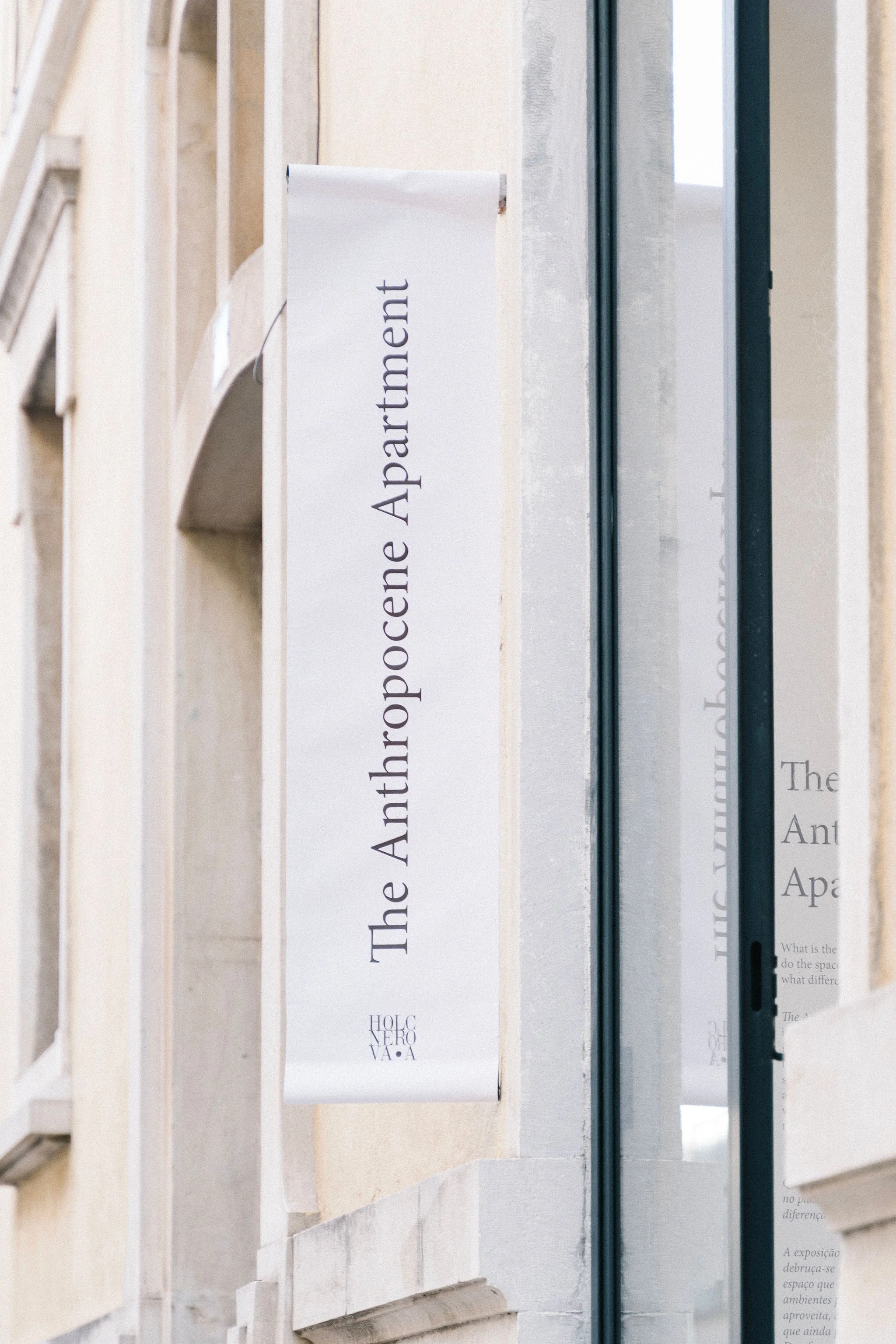
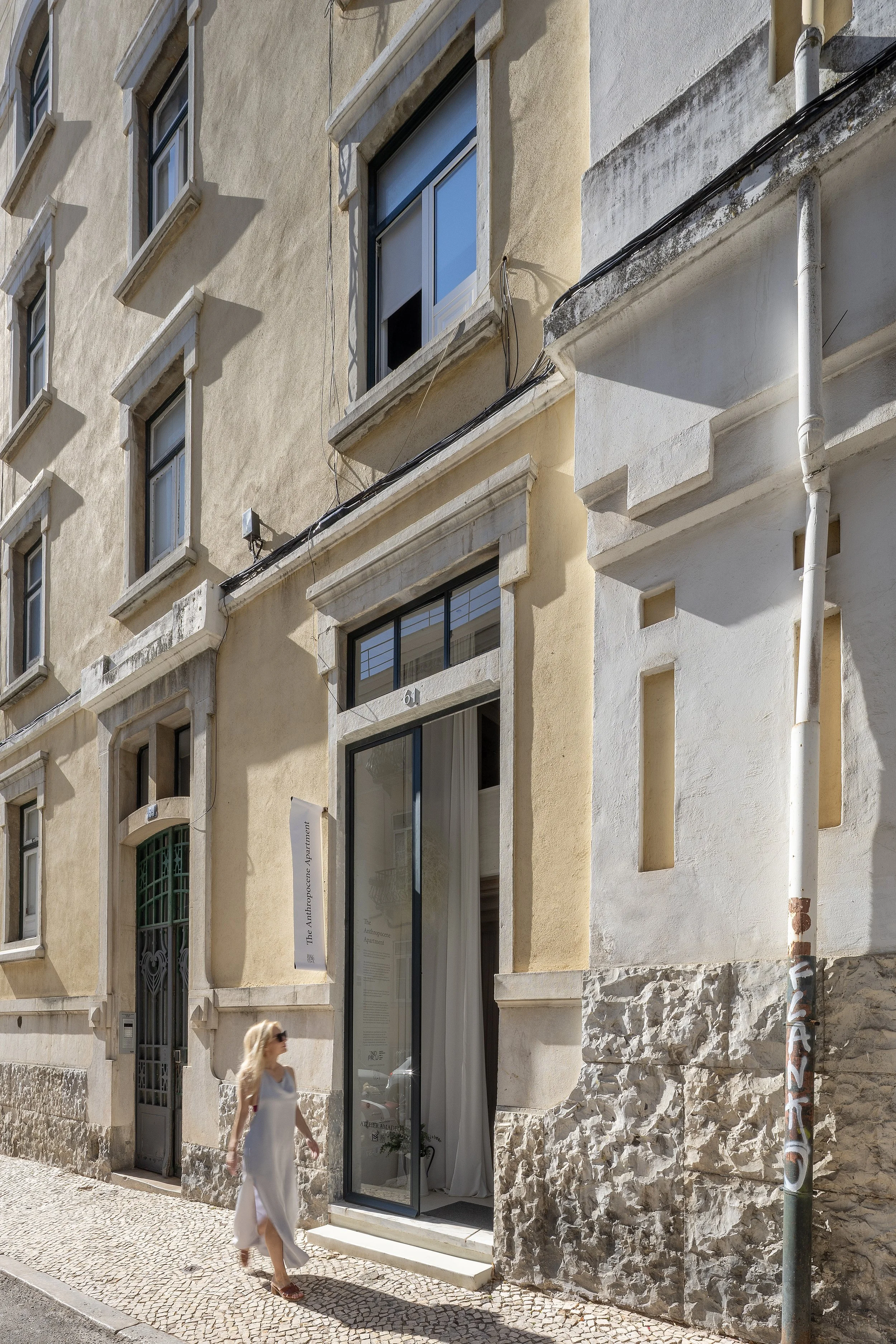
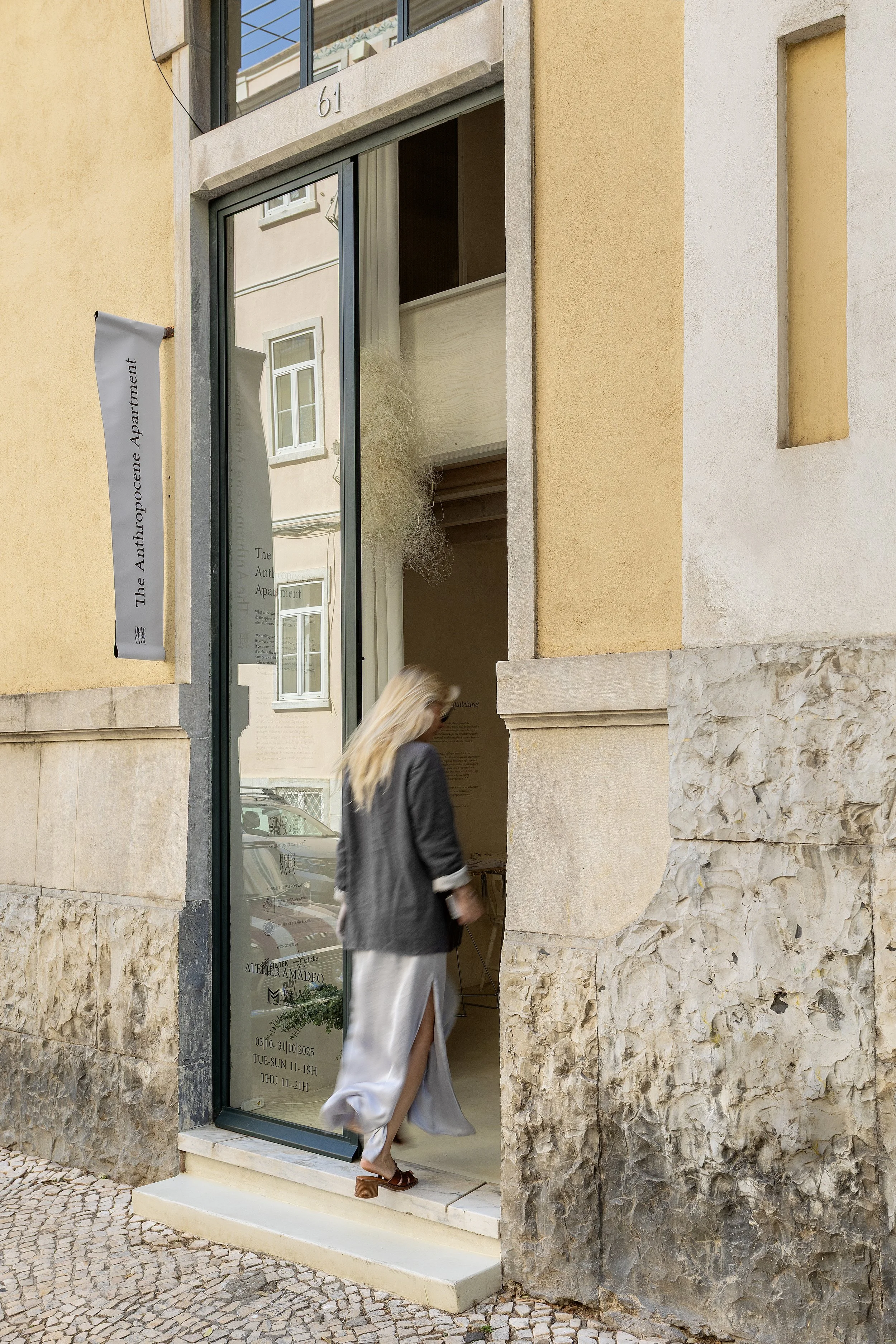
The Anthropocene Apartment | Exhibition | Lisbon | 2025
THE ANTHROPOCENE APARTMENT-LISBON TRIENNALE 2025
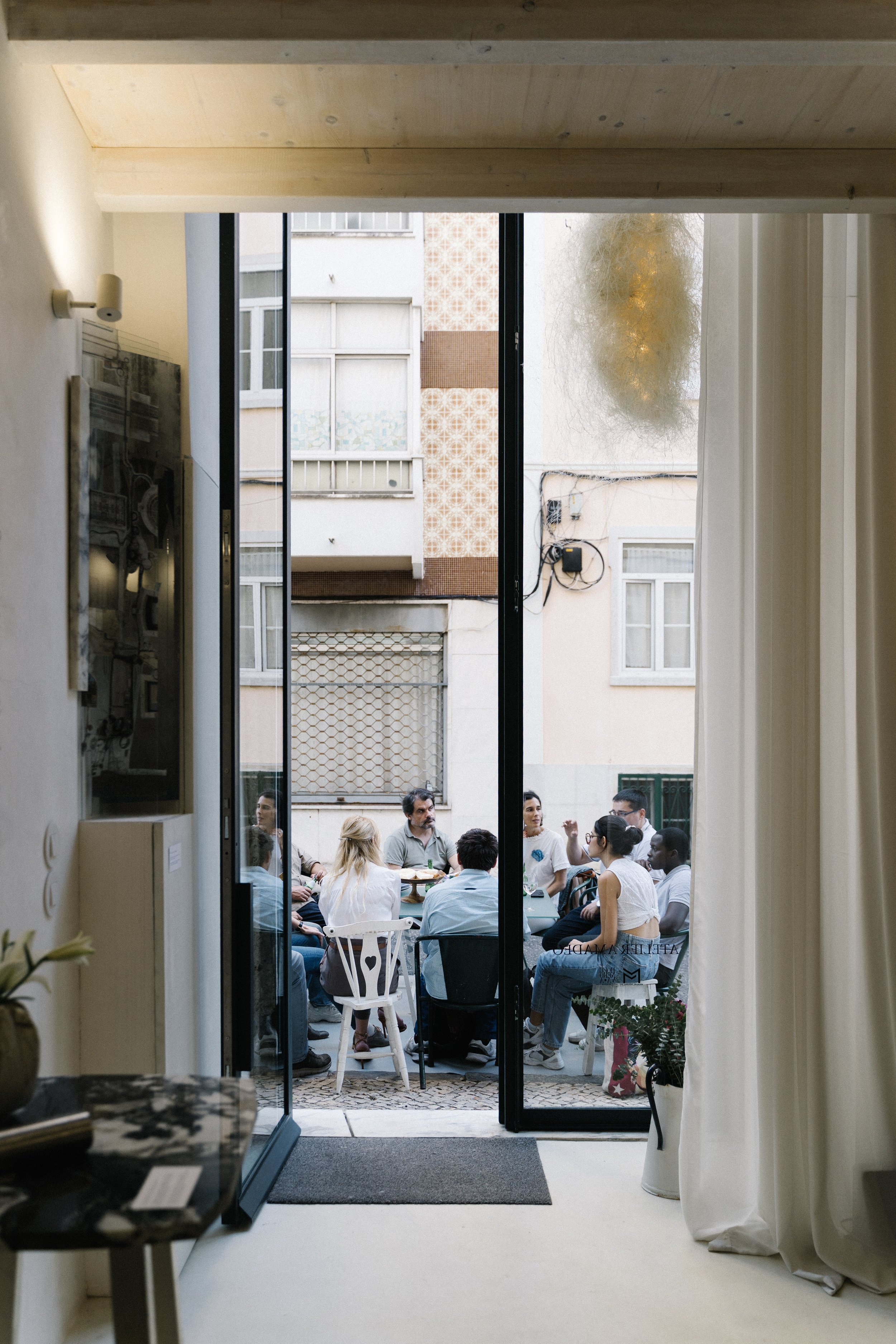
Atelier was selected as independent project through an open call to which 76 national and international proposals applied. Part of the Triennale's programme, where art, science and architecture put the themes under debate.
More about our exhibition
WE WERE SELECTED ON ARCHITECTURE LISBON TRIENNALE 2025!
Read a small article who we are and why we were selected.
Link here

Can the impact of architecture on the planet be translated into numbers? Yes, it can! The exhibition The Anthropocene Apartment by architect Lenka HOLCNEROVA examines the ecological footprint using the example of a specific apartment. What kind of footprint does it create, and what aspects of living can be eliminated to reduce it?
Thirty trillion tonnes: the weight of everything humanity has made.
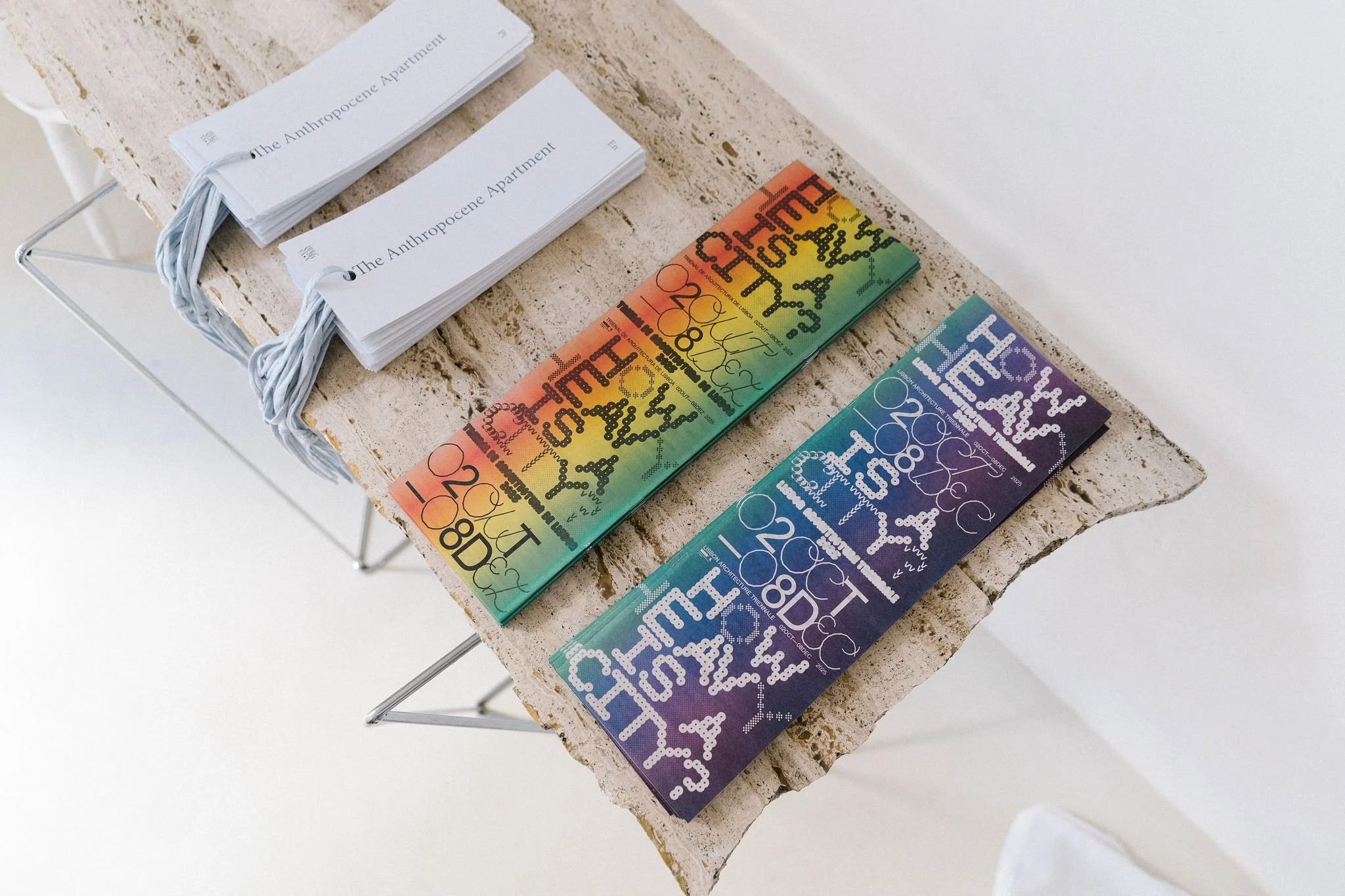
Lisbon’s Architecture Triennale turns that number into a question of responsibility, exploring how design can shift from extraction to care, from growth to balance.

The Exhibition
Can the weight of a city be measured through a single home?
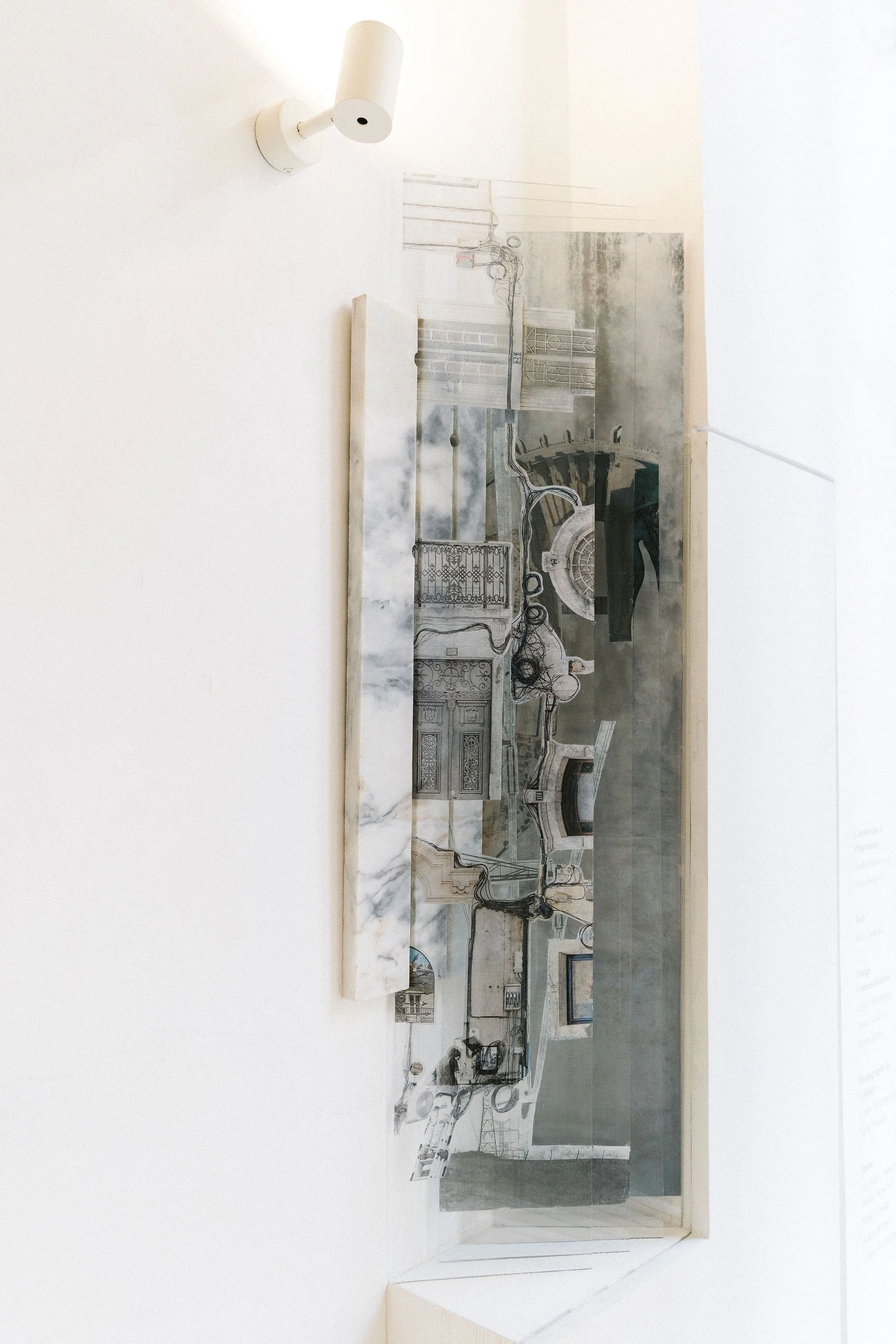
In The Anthropocene Apartment, architect Lenka Holcnerová and environmental historian Pavla Šimková transform a small Lisbon flat into a tangible reflection of how human life shapes the planet. By tracing where its water, energy, and materials come from. They reveal the hidden systems behind everyday living.
Find out here
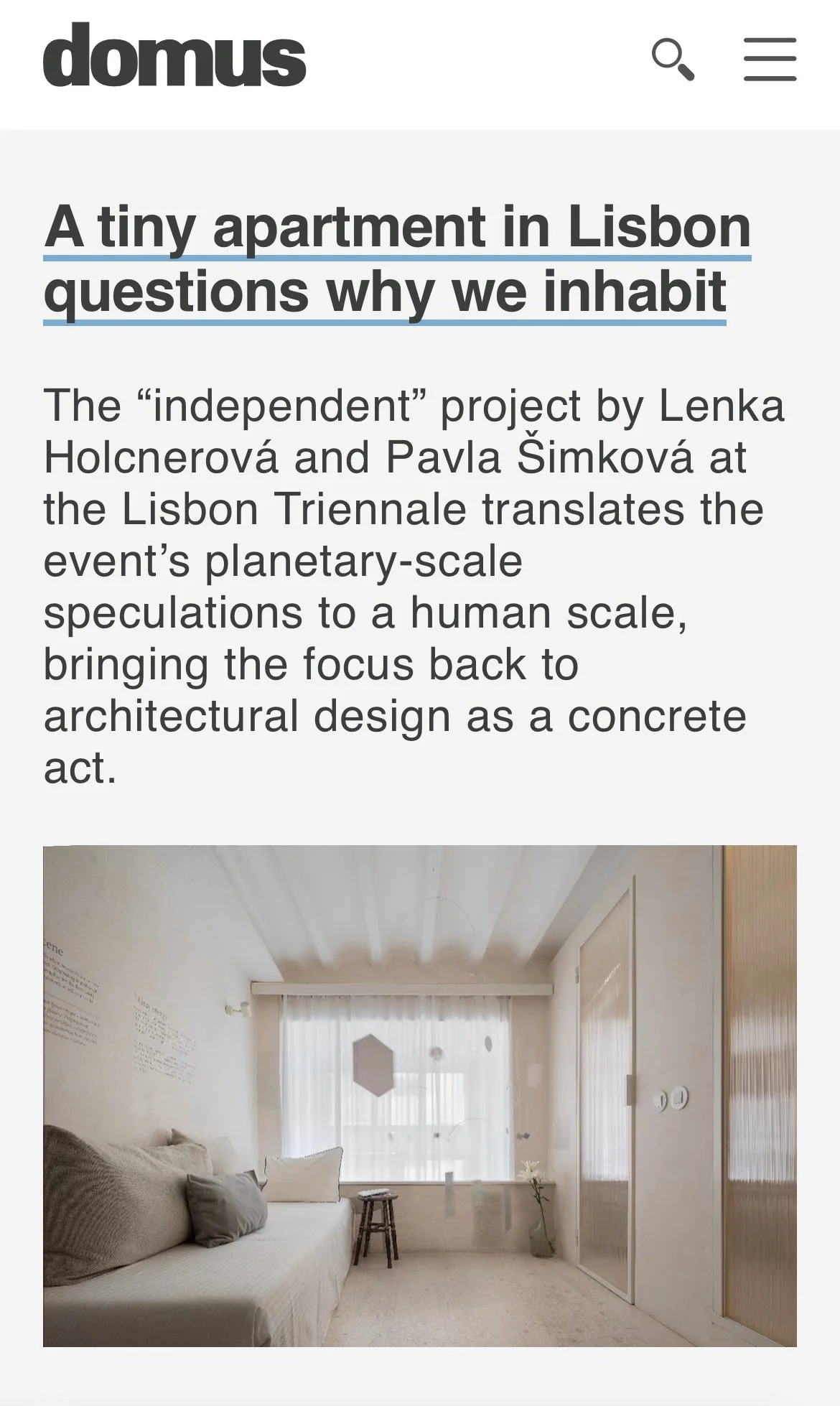
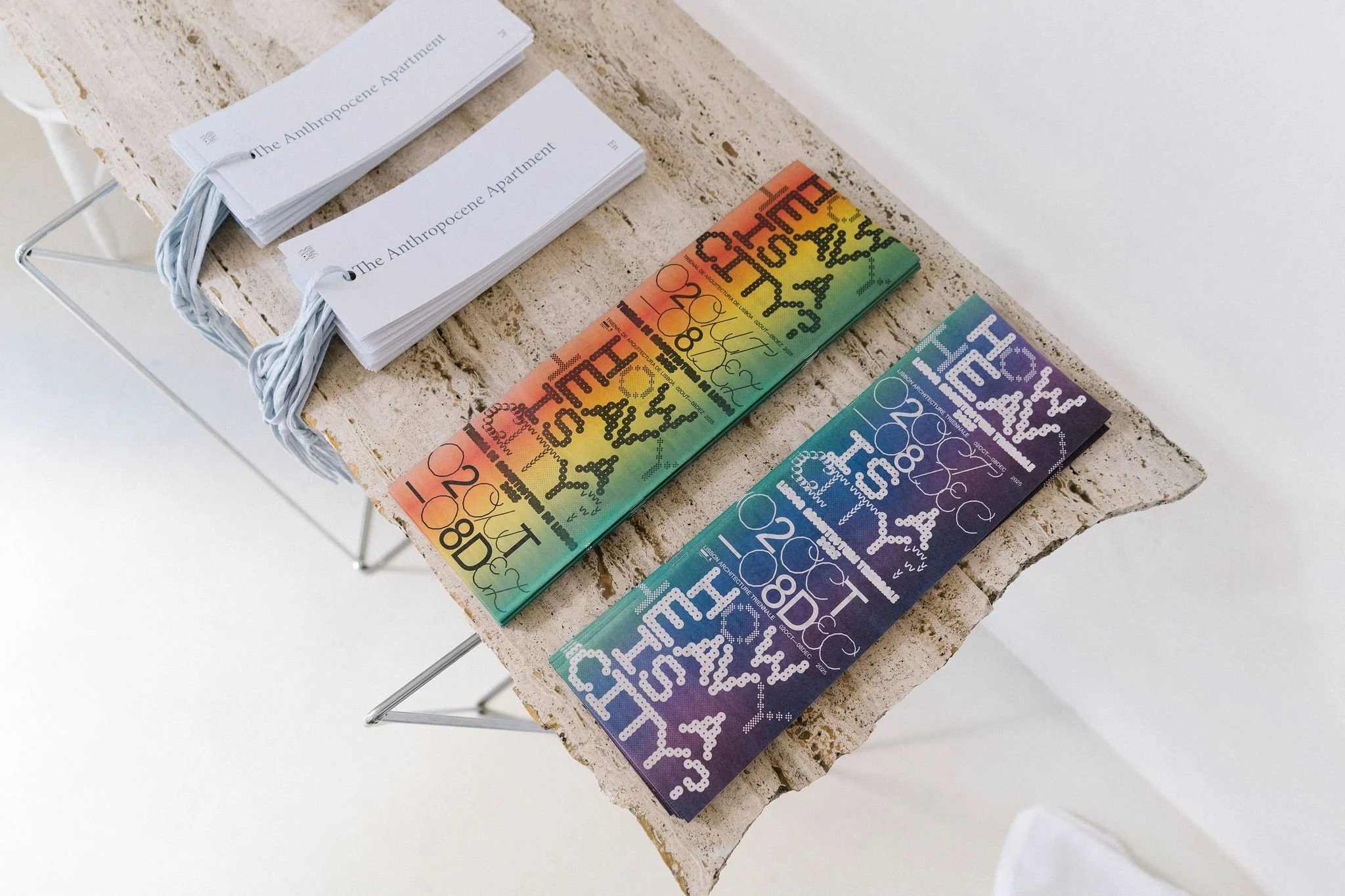
“How heavy is a city?” The 7th Lisbon Architecture Triennale reveals the hidden weight of the Technosphere. Projects like The Anthropocene Apartment by Holcnerova Atelier bring these global questions down to the scale of everyday living.
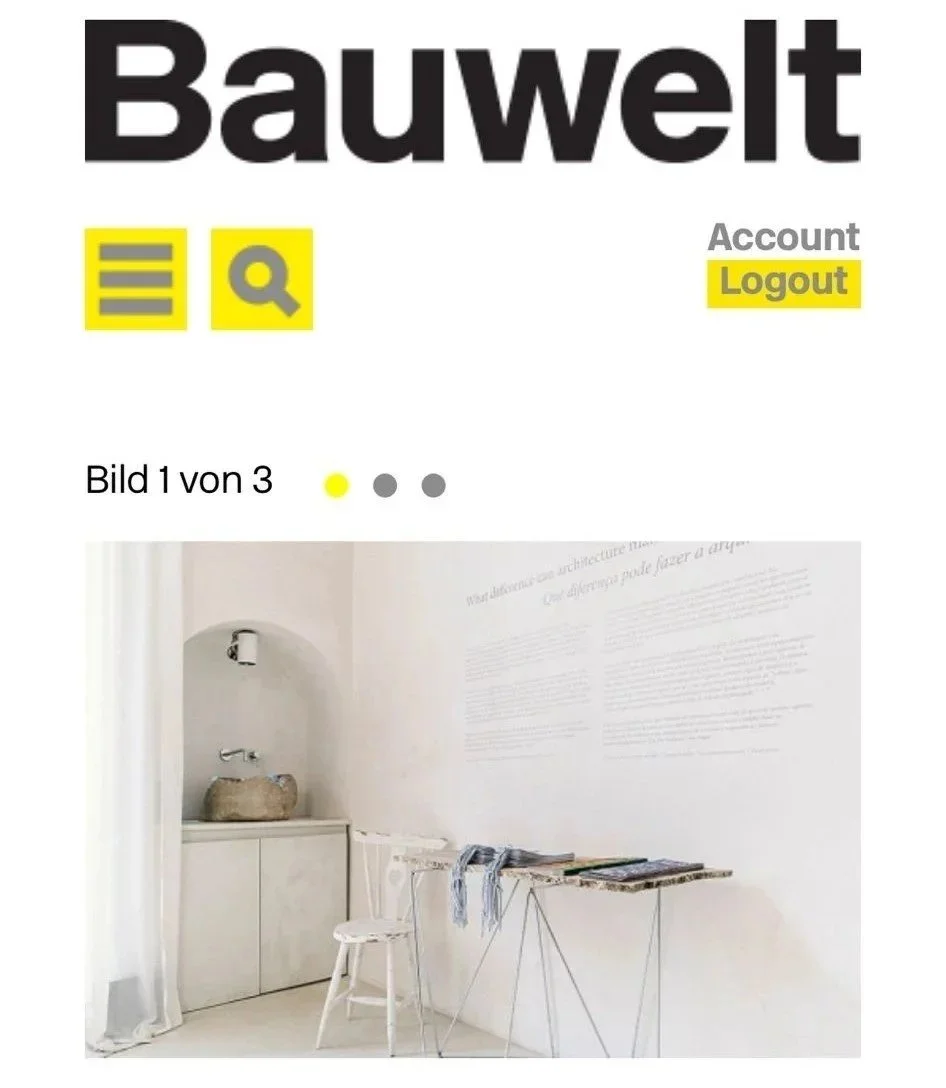
TRIENNAL REVIEW on WALLPAPER
In his review for Wallpaper, British author Herbert Wright wrote:
“... it may be the best independent project of all. The result is organic, contemporary, calm, and it looks refreshingly cool. To get a grip on the Anthropocene, we need to understand it. This Triennale is a tsunami of brilliantly presented insights. But we also need to be spiritually moved.”
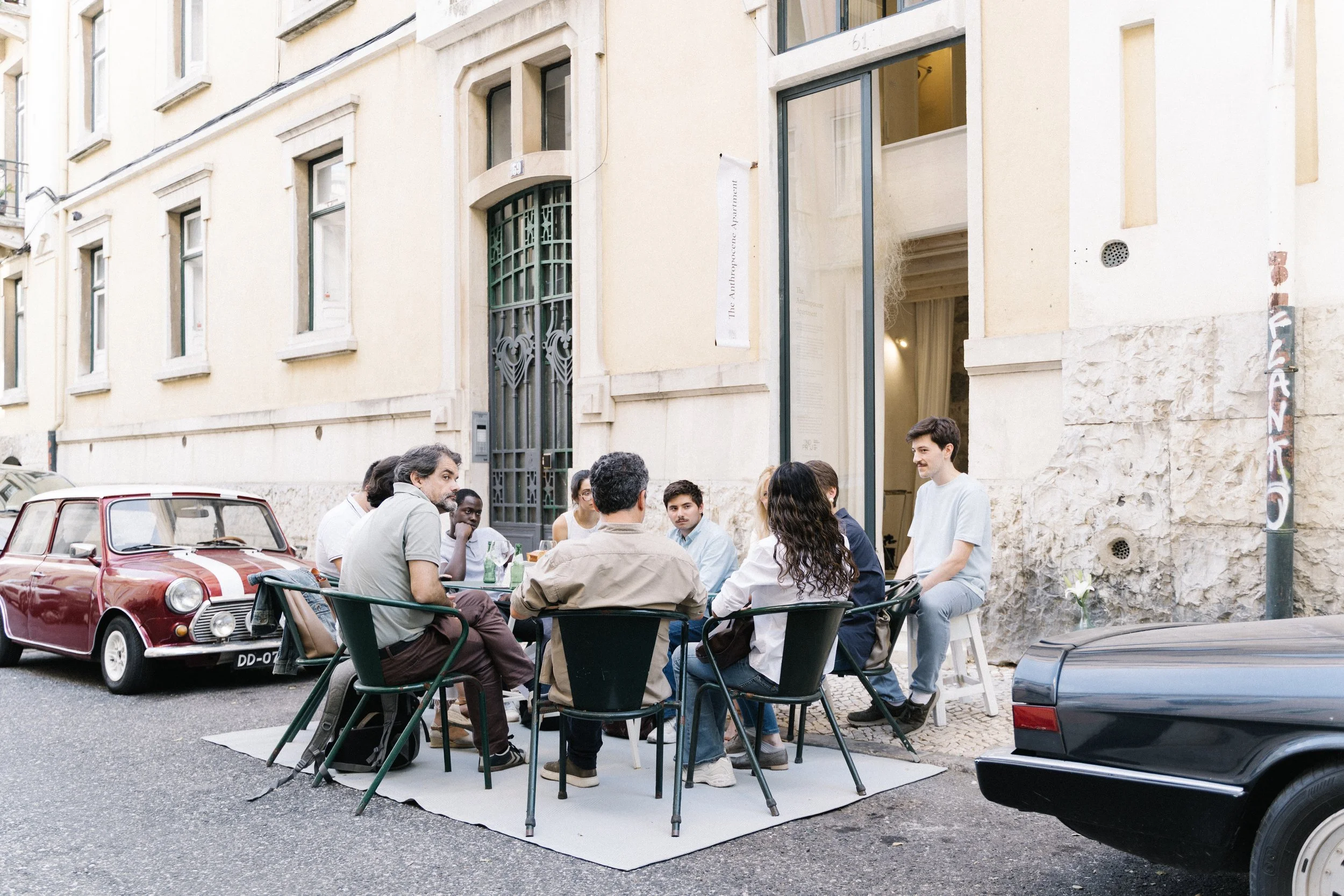
Join us on tour of the Lisbon’s Architecture Triennale 2025 and explore the question “How heavy is a city?”
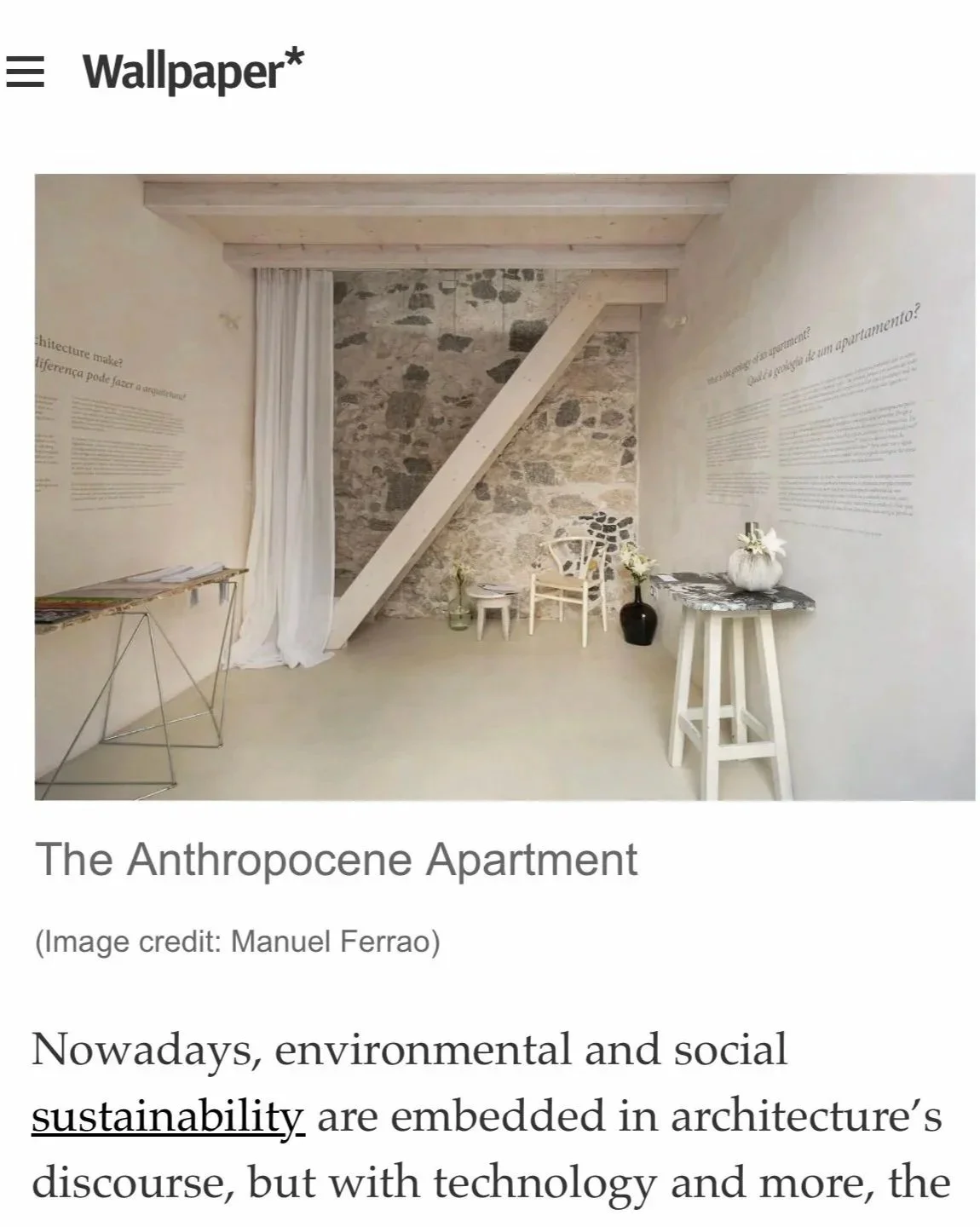
TRIENAL in Chroniques d’Architecture
Our exhibition The Anthropocene Apartment is featured in Chroniques d’Architecture, as part of the Lisbon Architecture Triennale 2025 coverage.
From a former power station on the banks of the Tagus River to a tiny arty eco-apartment, the Lisbon Architecture Triennial is a veritable introduction to exploring the technosphere.
Find more on chroniques d’architecture

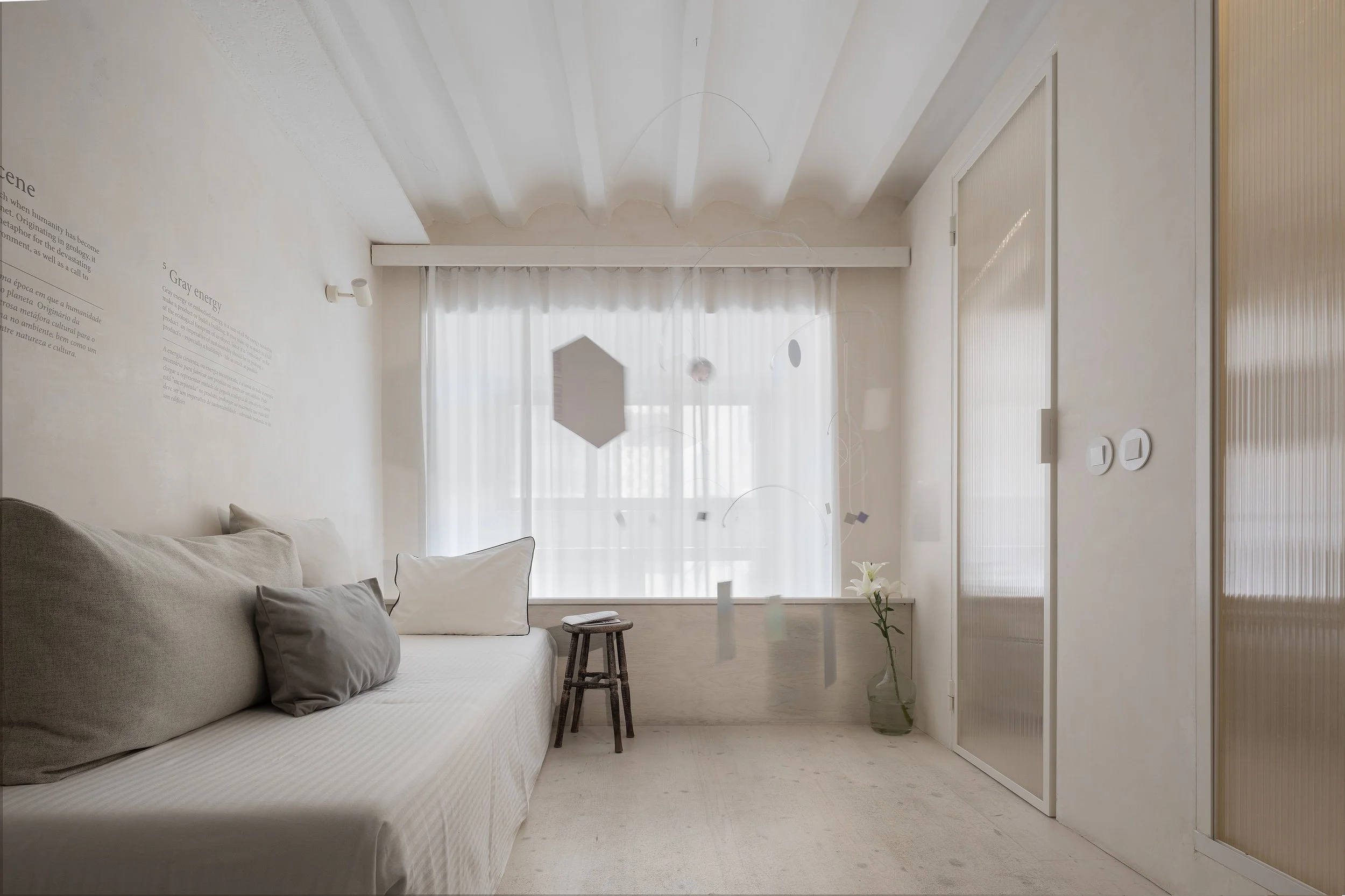
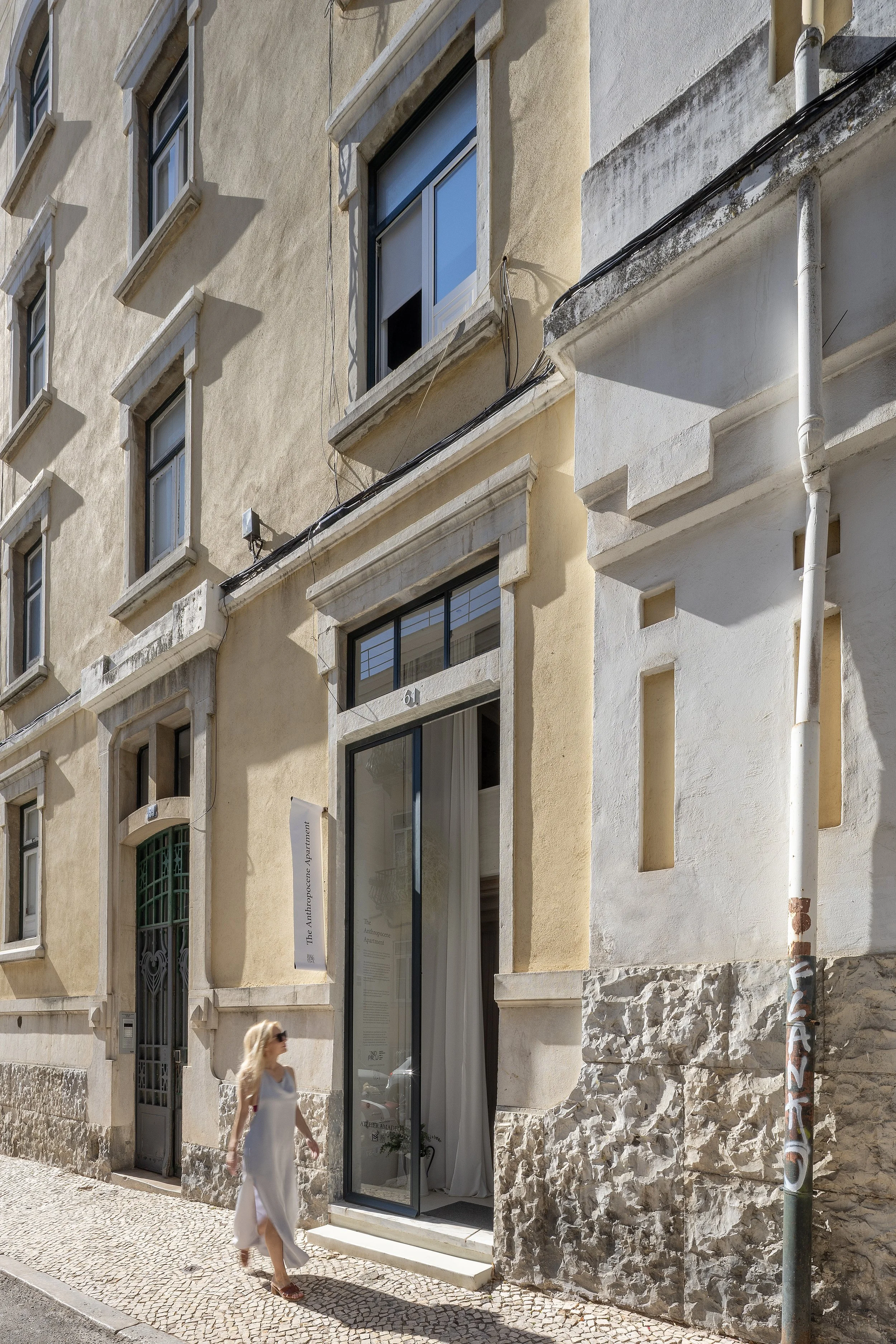
What is the geology of our homes? What impact do the spaces we live in have on the planet?
And what difference can architecture make?
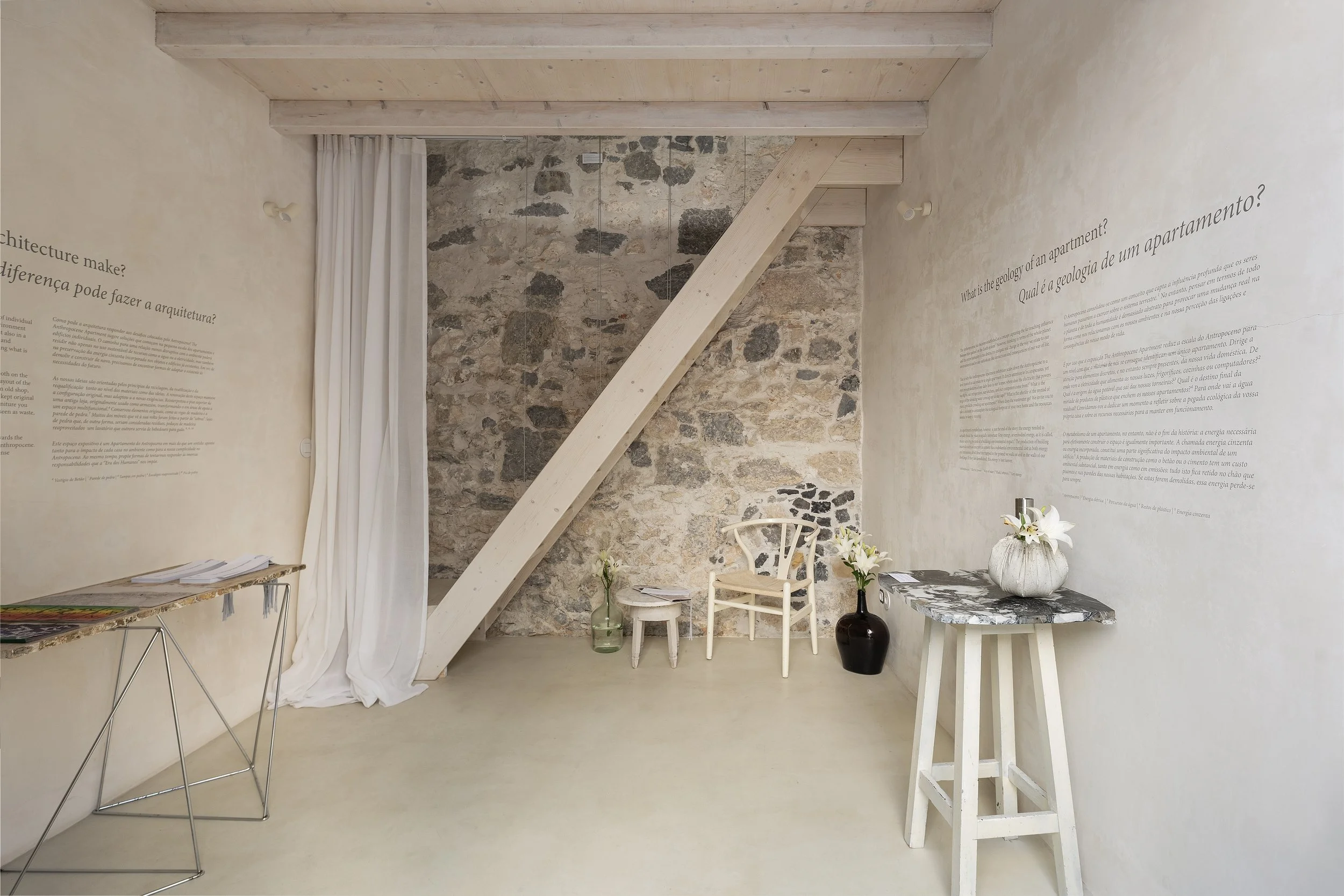
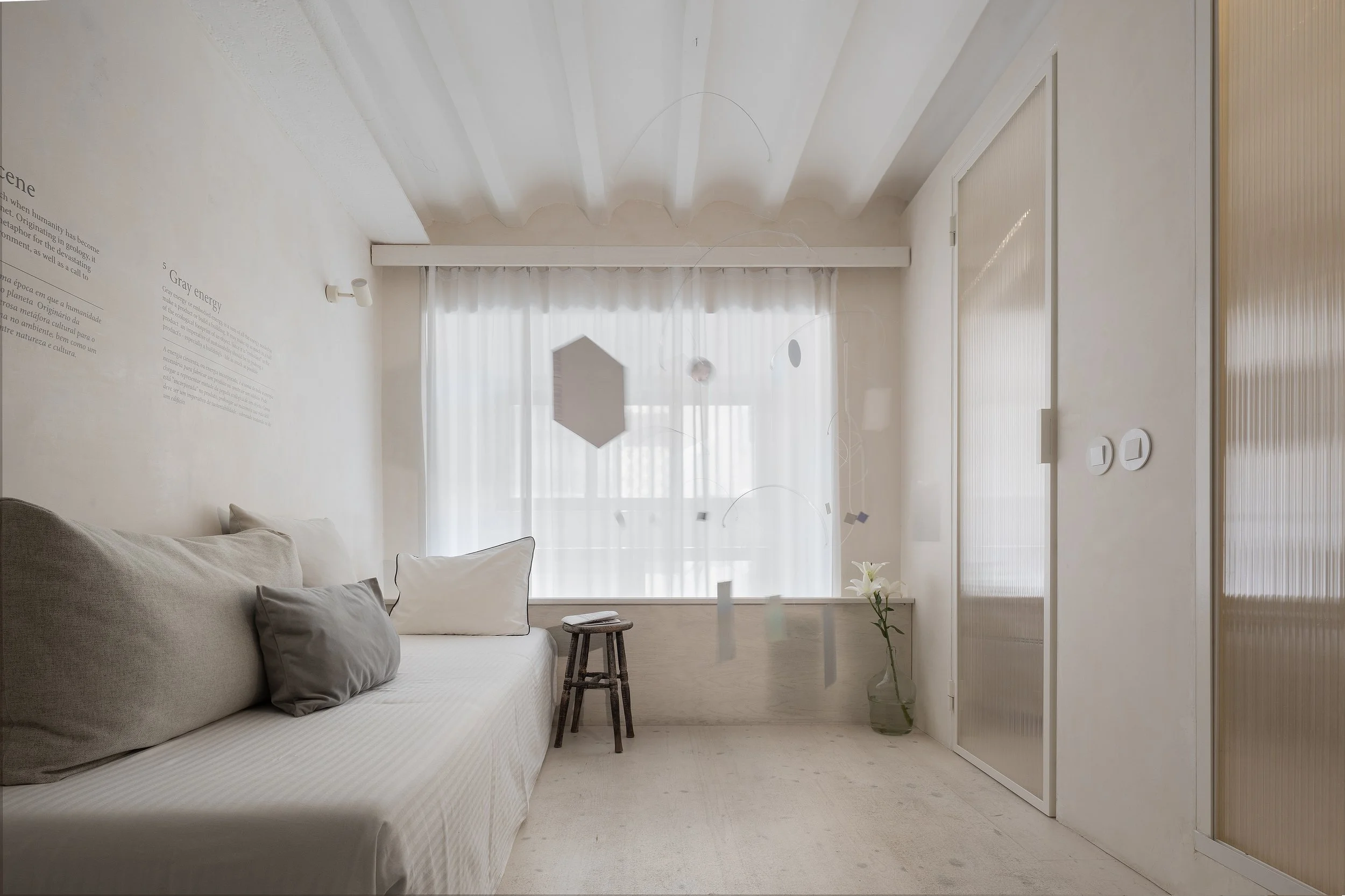
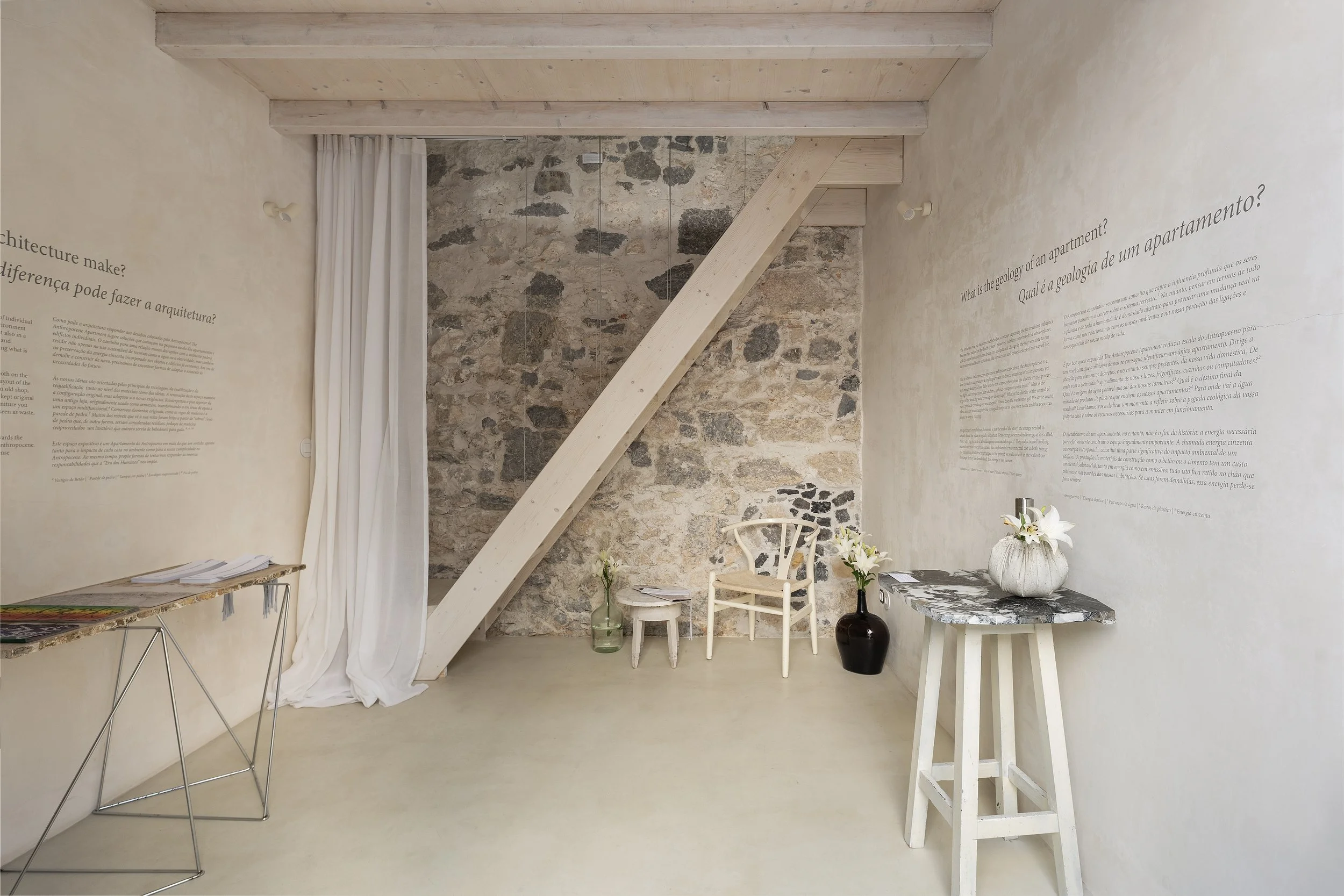
The Anthropocene Apartment exhibition looks at its venue’s own ecological footprint: the materials it consumes, the environments both near and far it exploits, the energy used to build it that still slumbers within its walls. It challenges architecture to suggest new and less disruptive ways of designing our homes and engaging with the world around us.
The Anthropocene
A concept suggesting we live in an epoch when humanity has become the defining geological force on the planet. Originating in geology, it has since become a powerful cultural metaphor for the devastating impact human activity has on the environment, as well as a call to rethink nature-culture relations.
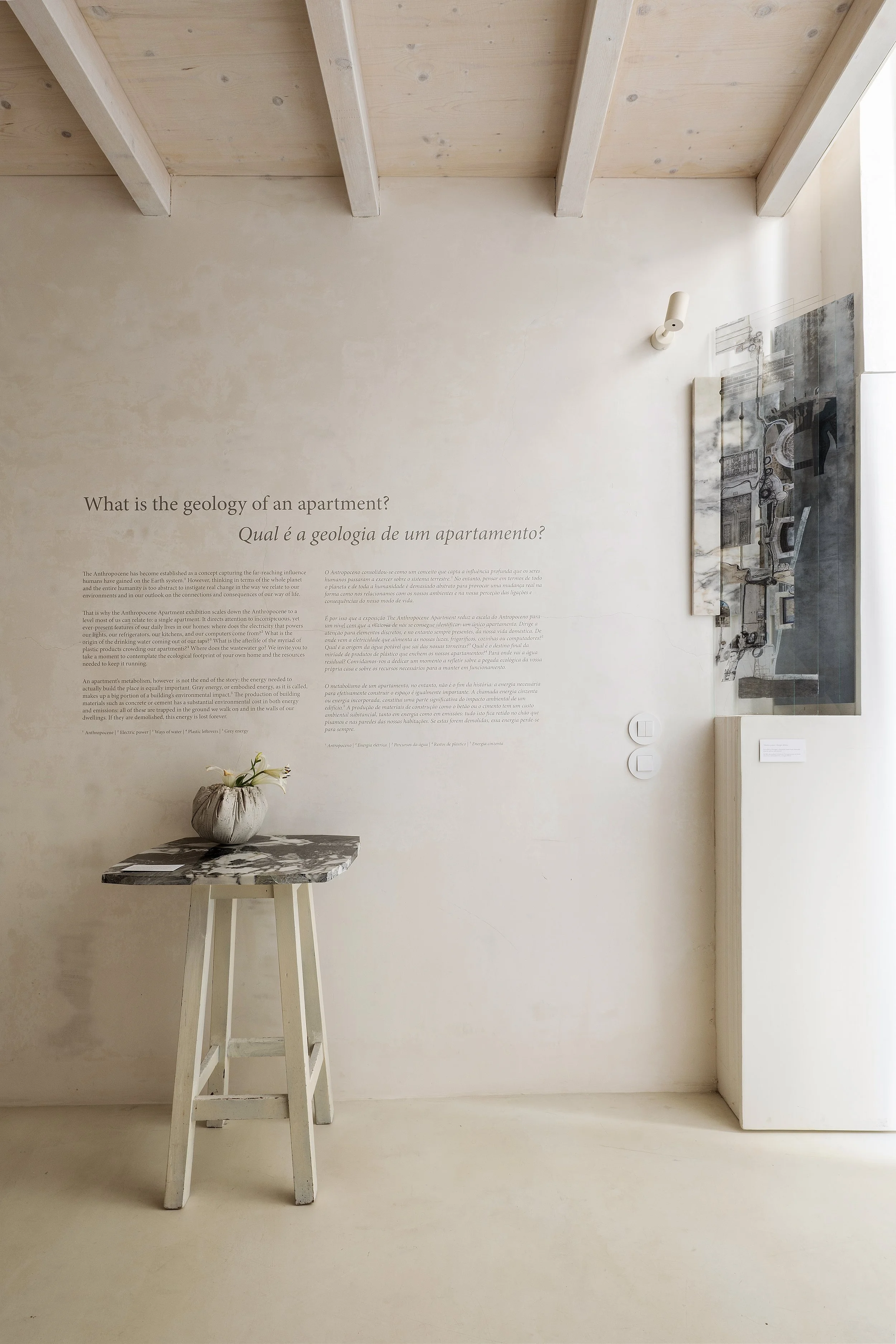
What is the geology of an apartment?
The Anthropocene has become established as a concept capturing the far-reaching influence humans have gained on the Earth system. º1 However, thinking in terms of the whole planet and the entire humanity is too abstract to instigate real change in the way we relate to our environments and in our outlook on the connections and consequences of our way of life.
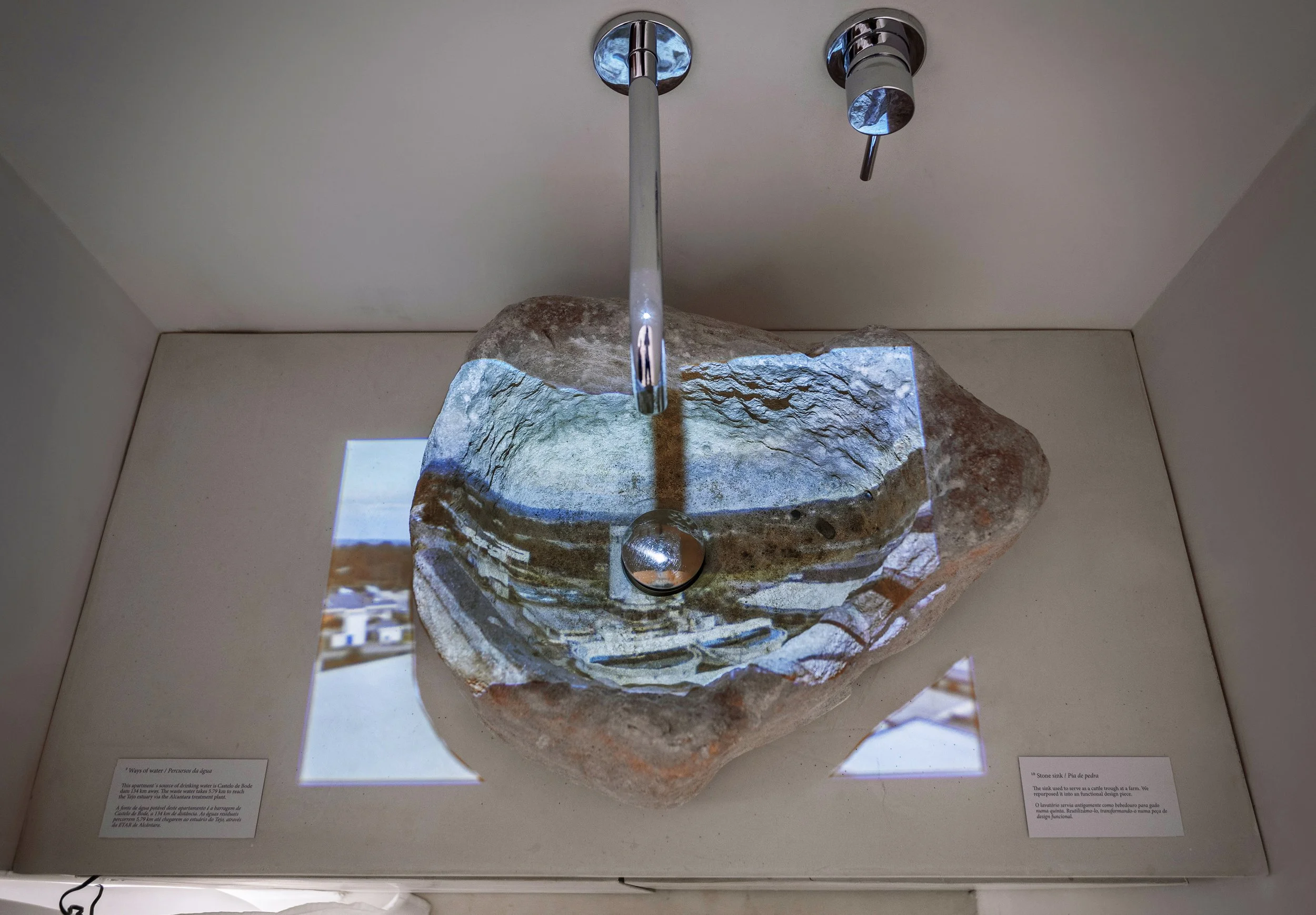
That is why the Anthropocene Apartment exhibition scales down the Anthropocene to a level most of us can relate to: a single apartment. It directs attention to inconspicuous, yet ever-present features of our daily lives in our homes: where does the electricity that powers our lights, our refrigerators, our kitchens, and our computers come from?º2 What is the origin of the drinking water coming out of our taps?º3 What is the afterlife of the myriad of plastic products crowding our apartments?º4 Where does the wastewater go? We invite you to take a moment to contemplate the ecological footprint of your own home and the resources needed to keep it running.
An apartment’s metabolism, however, is not the end of the story: the energy needed to actually build the place is equally important. Gray energy, or embodied energy, as it is called, makes up a big portion of a building’s environmental impact.º5 The production of building materials such as concrete or cement has a substantial environmental cost in both energy and emissions: all of these are trapped in the ground we walk on and in the walls of our dwellings. If they are demolished, this energy is lost forever.
Curatorship & Programme
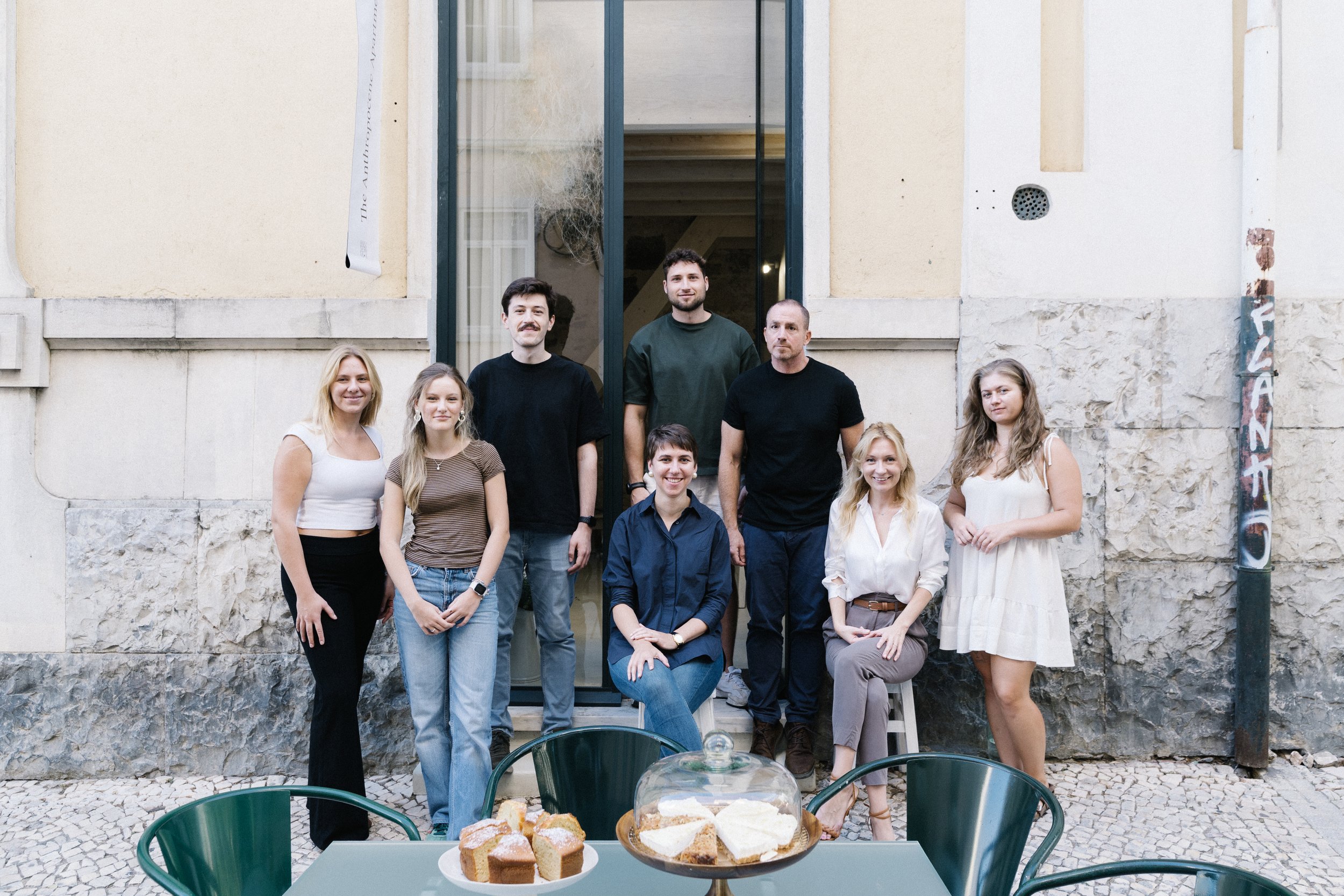
Lenka Holcnerová, Pavla Šimková
Texts
Pavla Šimková
Design & Communication
Lenka Holcnerová, Anna Vazačová, Adam Barnet
Photography & Collages
Lenka Holcnerová, Tarık Dindar
Team
Stephen J. Sabatino PhD, Anna Vazačová, Tarık Dindar, Adam Barnet, Leann Dakota Baermann
Gray energy
Gray energy, or embodied energy, is a sum of all the energy needed to make a product or build a building.
It may make up as much as a half of the ecological footprint of an object. Since it is “embodied” in the product, an imperative of sustainability should be to prolong a product’s – especially a building’s – life as much as possible.
What difference can architecture make?
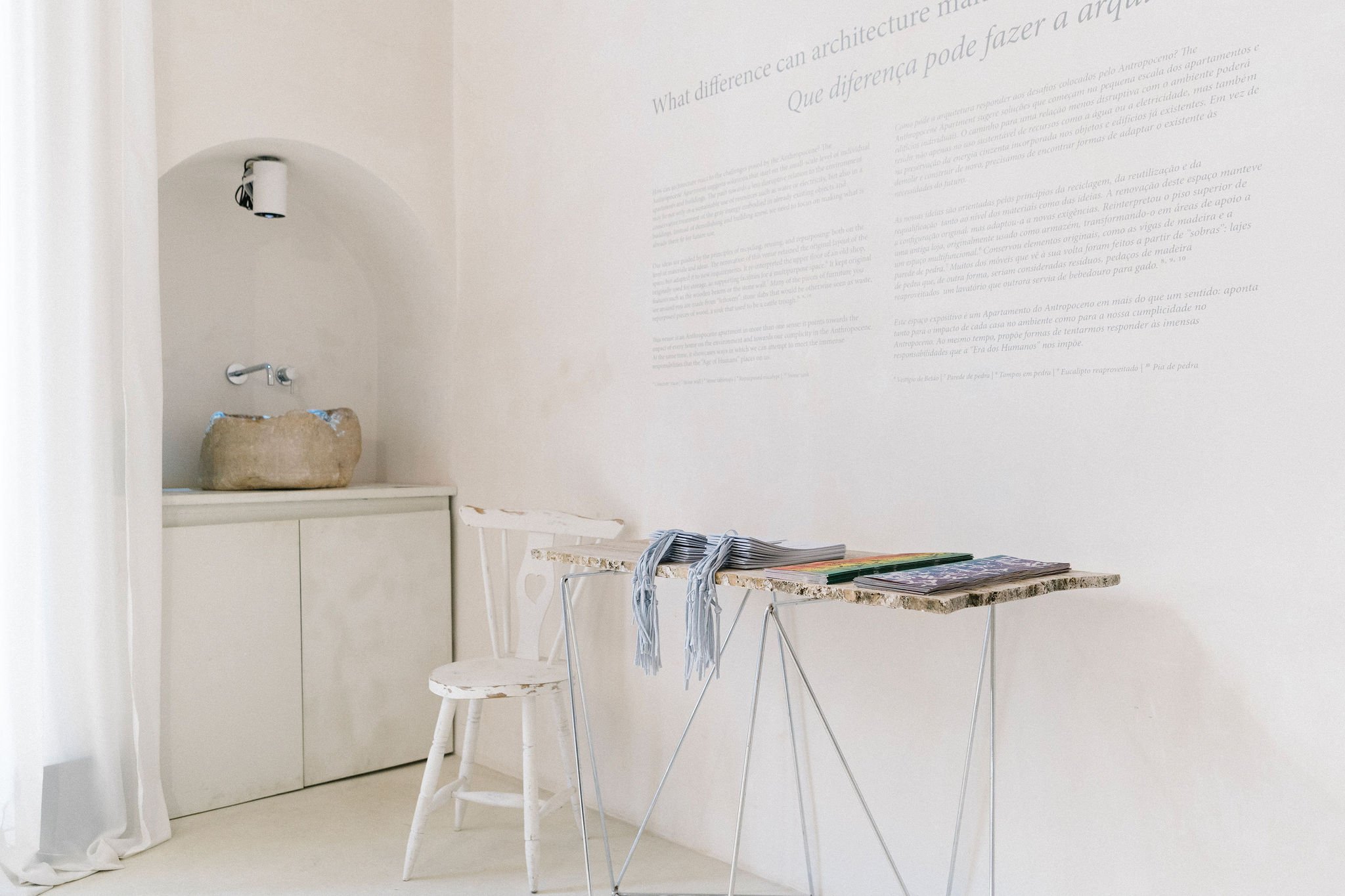
How can architecture react to the challenges posed by the Anthropocene? The Anthropocene Apartment suggests solutions that start on the small-scale level of individual apartments and buildings. The path towards a less disruptive relation to the environment may lie not only in a sustainable use of resources such as water or electricity, but also in a conservative treatment of the gray energy embodied in already existing objects and buildings. Instead of demolishing and building anew, we need to focus on making what is already there fit for future use.
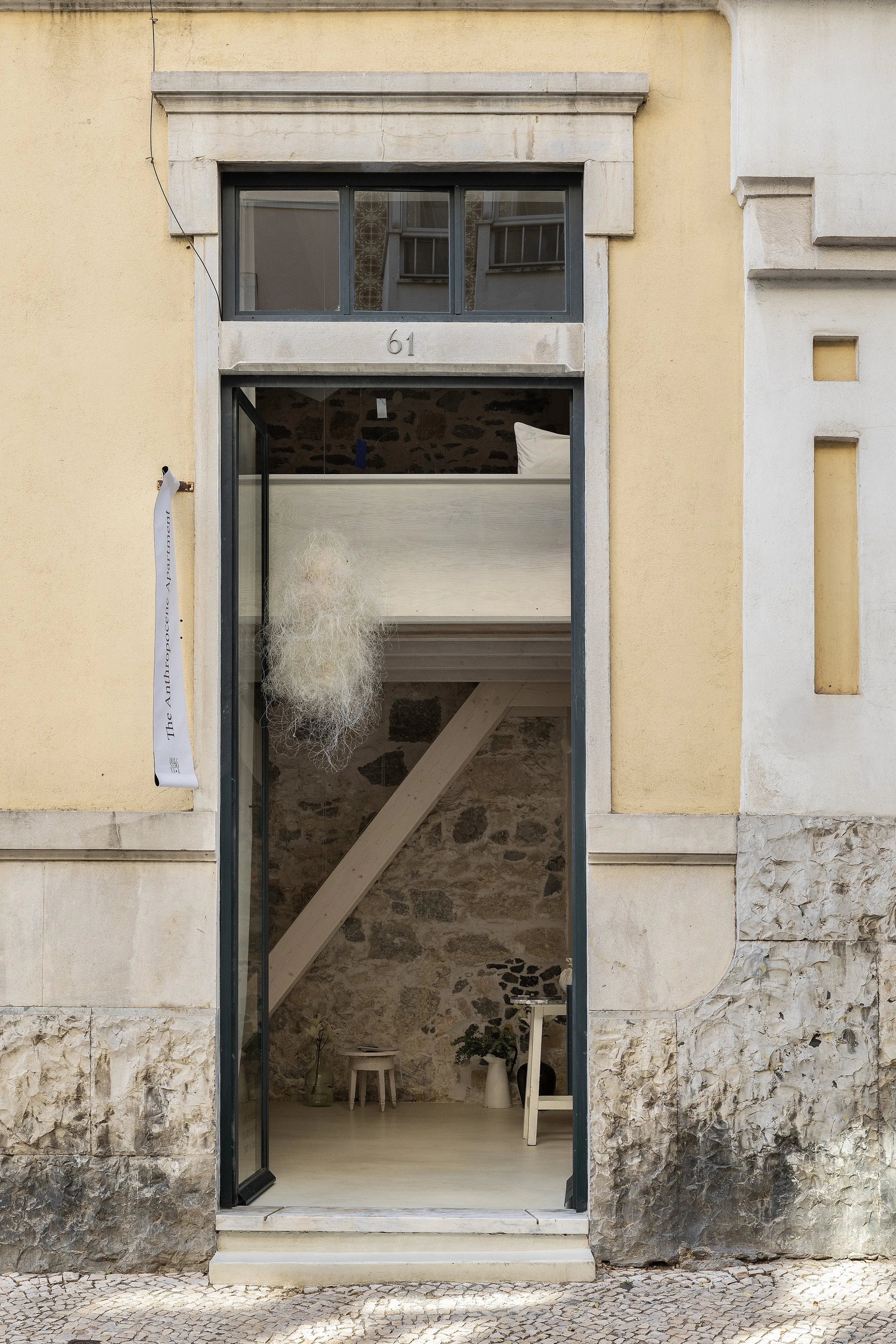
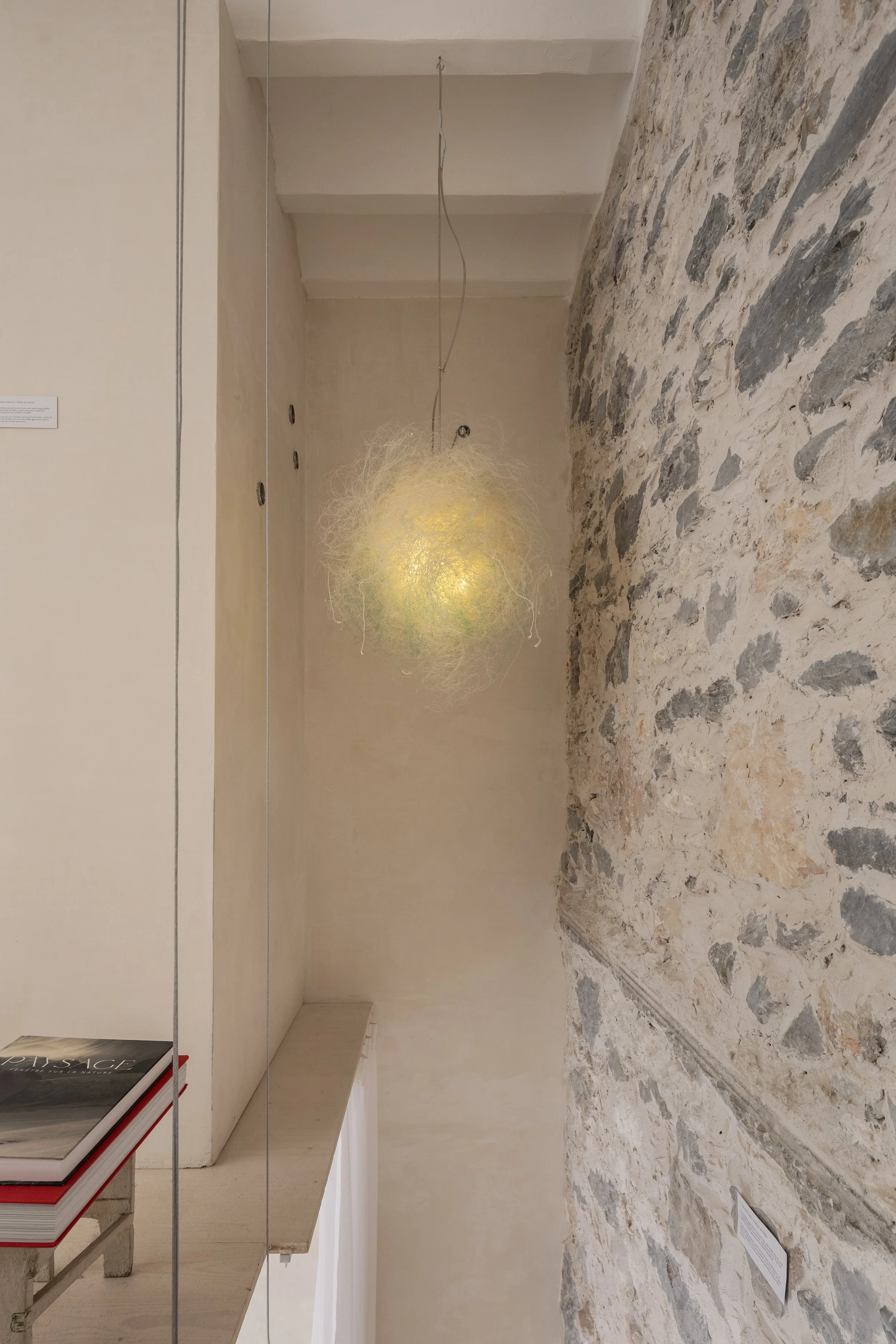
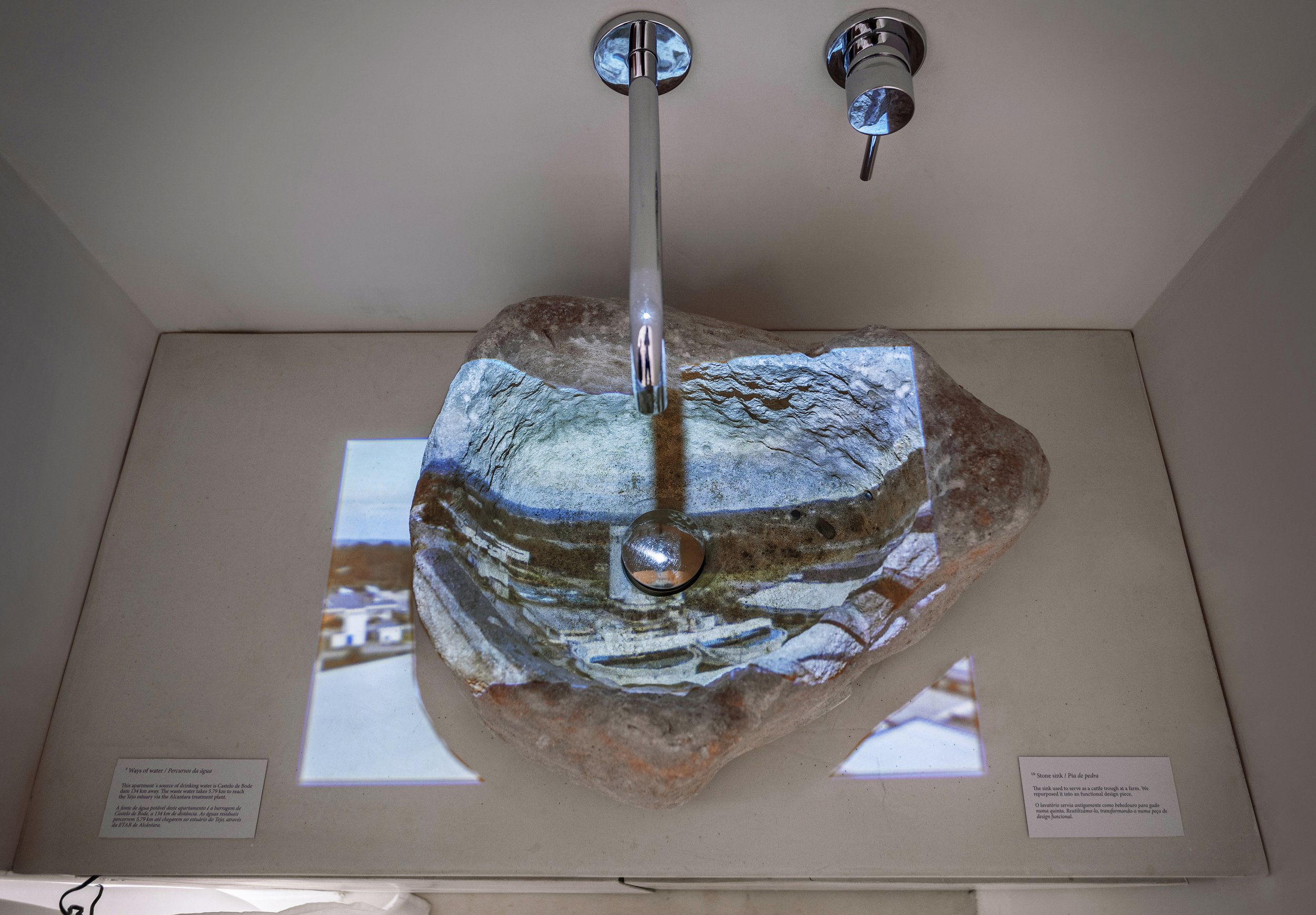
Our ideas are guided by the principles of recycling, reusing, and repurposing: both on the level of materials and ideas. The renovation of this venue retained the original layout of the space, but adapted it to new requirements. It re-interpreted the upper floor of an old shop, originally used for storage, as supporting facilities for a multipurpose space. º7 It kept original features such as the wooden beams or the stone wall º9. Many of the pieces of furniture you see around you are made from “leftovers”: stone slabs that would be otherwise seen as waste, repurposed pieces of wood, a sink that used to be a cattle trough. 10º, 11º, 12º
This venue is an Anthropocene apartment in more than one sense: it points towards the impact of every home on the environment and towards our complicity in the Anthropocene. At the same time, it showcases ways in which we can attempt to meet the immense responsibilities that the “Age of Humans” places on us.